Both are seamless. Both are durable. Both are chemical-resistant and far superior to bare concrete or tiles. They are also fundamentally different materials, built for different environments, and specifying the wrong one is an expensive mistake you will live with for years.
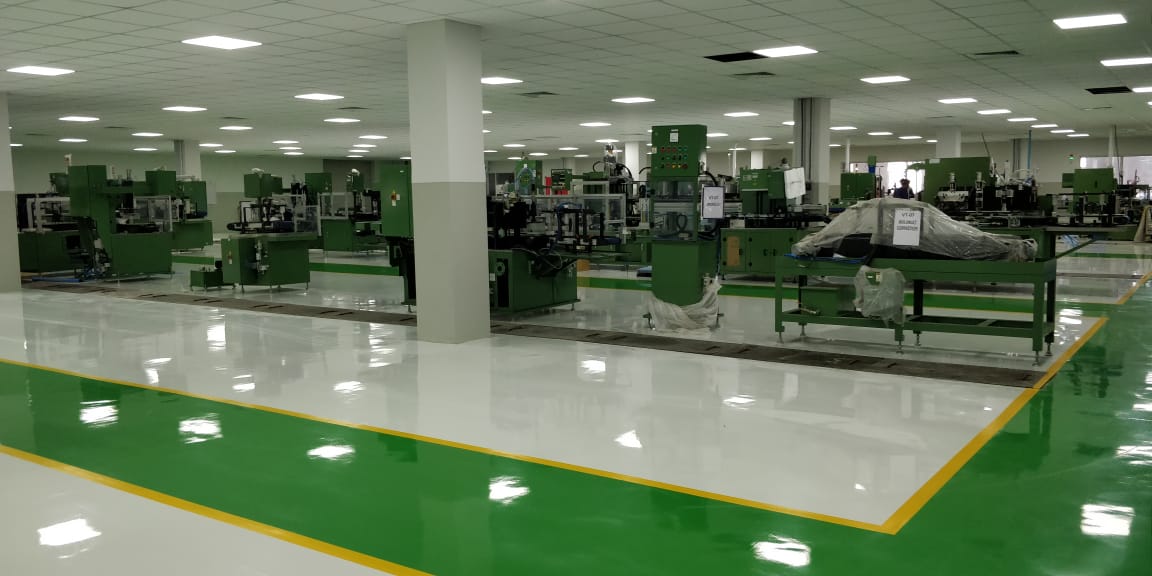
Epoxy: Hard, Rigid, Uncompromising
Epoxy is a thermosetting resin system. When the two components cure, they form a rigid, cross-linked polymer that is extremely hard, glossy and chemically resistant. It handles heavy loads without deforming. It resists oils, solvents and most industrial chemicals. It is easy to clean and maintain.
Best environments: Warehouses, factories, pharmaceutical plants, laboratories, food processing facilities, showrooms and commercial kitchens. Any space that needs maximum hardness, easy cleaning and chemical resistance.
Where it struggles: Epoxy is rigid, which means it cracks under substrate movement and thermal cycling. It yellows under UV exposure. It becomes slippery when wet unless anti-slip aggregate is added. Do not use standard epoxy in cold storages, outdoor areas or anywhere with significant temperature swings.
PU Flooring: Flexible, UV-Stable, Built for Extremes
Polyurethane systems retain elasticity after curing. They absorb substrate movement and thermal shock without cracking. They have significantly better UV resistance than epoxy. They are the material of choice wherever temperatures move dramatically or where the floor is partially exposed to the elements.
Best environments: Cold storages, hospital OTs and clinical spaces, car parks, driveways, outdoor or semi-exposed areas, and food and beverage facilities with heavy thermal cycling.
Where it struggles: PU systems cost more than epoxy. They require careful substrate preparation. Any moisture in the concrete can cause adhesion failure. Surface hardness is slightly lower than epoxy, which can be a disadvantage in very high-abrasion environments.
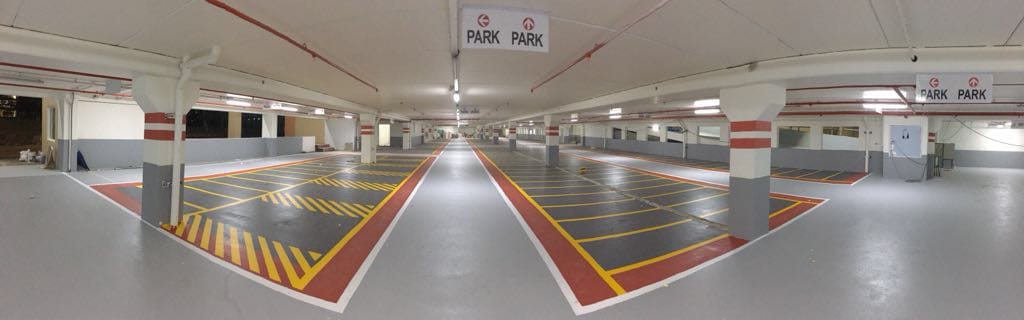
The Simple Rule
Stable temperature, heavy load, maximum hardness required? Epoxy. Temperature extremes, UV exposure, substrate movement expected? PU. Many serious facilities use both: epoxy in the main production or storage area and PU in cold storage zones or loading docks.
Brahmaputra Minerals & Metals Co. executes both systems using premium products from Asian Paints and FOSROC. We will assess your site and specify the right system. Not the most expensive one, not the easiest one to apply. The right one.